
The Association of Licensed Telecommunications Operators of Nigeria (ALTON) has raised serious concerns over the growing wave of vandalism and theft targeting telecommunications infrastructure nationwide.
In response to this alarming trend, ALTON has called on key national security agencies—including the Office of the National Security Adviser (ONSA), the Inspector General of Police, the Director General of the Department of State Services (DSS), and the Commandant General of the Nigeria Security and Civil Defence Corps (NSCDC)—to immediately deploy necessary resources to protect telecom infrastructure and avert a potential nationwide communications blackout.
In a joint statement signed by ALTON Chairman, Gbenga Adebayo, and Secretary, Damien Udeh, the association emphasised that following decisive interventions by the Federal Government earlier this year to support industry sustainability, its members have committed unprecedented investments in network optimisation and capacity expansion.
“New systems are being deployed, transmission equipment is being modernised, power systems are being overhauled, and thousands of kilometers of fiber optic cables are currently being laid and expanded. The industry has not witnessed this scale of investment in recent years,” the statement noted.
Despite these efforts, ALTON lamented that from May to July 2025 alone, multiple incidents of vandalism were recorded across cell sites in Rivers, Ogun, Osun, Imo, Kogi, Ekiti, Lagos, the Federal Capital Territory (FCT), and many other states.
“These acts of sabotage have severely disrupted network services, causing widespread blackouts, degradation of service quality, and major inconveniences for millions of subscribers,” the association stated.
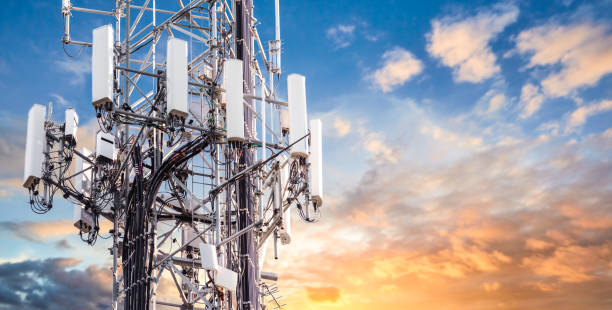
The vandalized infrastructure includes critical components such as power cables, rectifiers, fiber optic cables, feeder cables, diesel generators, batteries, and solar systems. These components, ALTON stressed, are not mere materials—they form the backbone of Nigeria’s digital economy, national security apparatus, and communications grid.
The association is alarmed by the increasing frequency, scale, and geographic spread of these attacks, with states such as Delta, Rivers, Cross River, Akwa Ibom, Ogun, Ondo, Edo, Lagos, Kogi, FCT, Kaduna, Niger, Osun, and Kwara identified as major hotspots.
“These incidents have led to prolonged downtimes, increased network congestion, and compromised service delivery,” the group added.
ALTON reminded the public that telecommunications infrastructure is classified as Critical National Infrastructure (CNI) under the National Security Framework, as affirmed by Federal Government Gazette No. 133, Volume 108, dated March 17, 2021. Vandalism, sabotage, or illegal possession of these assets is a serious criminal offense with grave legal consequences.
The association also expressed concern over the growing black market for stolen telecom equipment, including:
- Power cables and rectifiers stolen from base stations and sold in open markets
- Batteries repurposed for home and office inverters
- Solar panels stripped from telecom sites and resold to households
- Diesel fuel siphoned and sold on the grey market
“We urge members of the public to be vigilant and avoid buying suspicious equipment. If you buy stolen telecom assets, you are not only complicit—you are actively participating in a crime,” ALTON warned.
The association appealed to all Nigerians to join the fight against the destruction of telecom assets, emphasizing that these infrastructures are crucial to essential services such as banking, security, emergency response, education, and healthcare.
“An attack on telecom infrastructure is an attack on our economy and our national security,” ALTON declared.
Another persistent challenge highlighted by ALTON is the widespread damage to underground fiber optic cables caused by road construction and other civil works along major highways and urban areas. These damages have triggered major service outages and financial losses for network operators.
ALTON commended the Nigerian Communications Commission (NCC) for its proactive efforts in safeguarding telecom infrastructure, especially the launch of a dedicated reporting portal. Citizens are encouraged to report vandalism or suspicious activity via protect@ncc.gov.ng or by calling 622.
“This is a desperate and urgent hour. The industry cannot fight this battle alone. We need coordinated national action—by security agencies, all levels of government, regulators, the media, civil society, and the general public. Our national security, economic stability, and digital future depend on it,” the statement concluded.