
After more than a decade of active participation in prestigious global technology events such as the Gulf Information Technology Exhibition (GITEX) in Dubai, Marrakech in Morocco, and Berlin in Germany—an initiative originally championed by the National Information Technology Development Agency (NITDA)—Nigeria has taken a bold step by bringing the global showcase home.
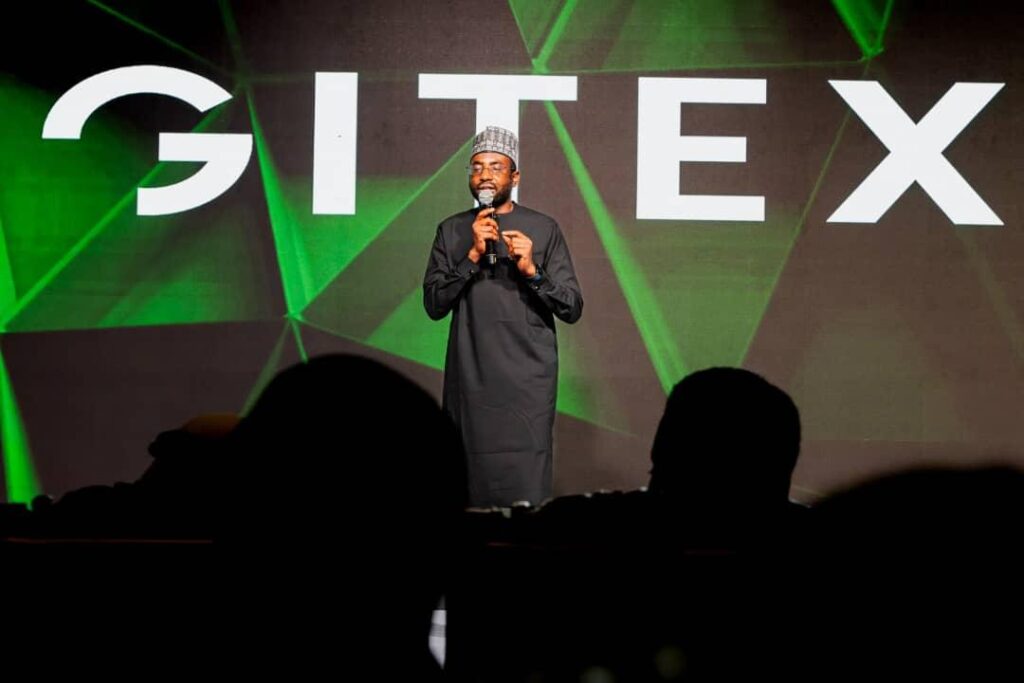
On Monday, the nation inaugurated its first international technology exhibition in Abuja, marking a significant milestone in its digital transformation journey. The landmark event brings together government leaders, policymakers, investors, and startups, united by a shared vision to drive innovation, foster collaboration, and position Nigeria as Africa’s leading tech hub.
The exhibition not only reflects Nigeria’s growing influence in the global tech ecosystem but also underscores its commitment to nurturing homegrown solutions and attracting international partnerships.
Lagos Leads the Charge
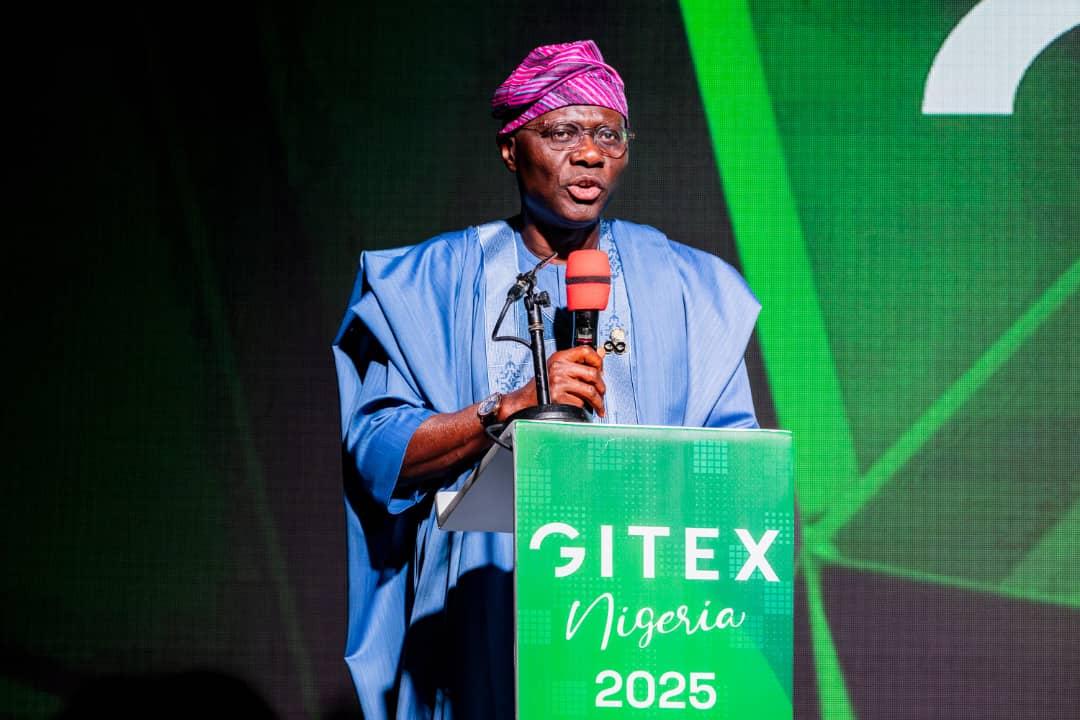
Speaking at GITEX Nigeria in Lagos, Governor Babajide Sanwo-Olu announced that Lagos has attracted over $6 billion in foreign investment into its tech startup sector between 2019 and 2024. This, he said, cements Nigeria’s position as Africa’s innovation hub.
“Lagos’ transformation is no longer aspirational—it is a living reality,” Sanwo-Olu declared, citing hyperscale data centres, submarine cables, and a citywide fibre grid as proof of the state’s digital revolution.
Lagos now accounts for over 70% of Nigeria’s tech inflows and has nurtured more than 70% of Africa’s unicorns. “We’re not just an economic powerhouse; we are Africa’s innovation capital,” he affirmed.
The governor credited visionary leadership and long-term planning, recalling Lagos’ early adoption of Oracle database systems under then-Governor Bola Ahmed Tinubu, now President of Nigeria. “That foundation is still powering our systems today,” he noted.
Sanwo-Olu also highlighted the success of the Blue Line electric rail system, which this week marks two years of operation, serving over five million passengers with zero downtime. Its unified payment solution, the Cowry Card—designed by young Lagosians—is now used across buses, taxis, waterways, and rail.
“At the heart of Lagos’ transformation,” he said, “is the belief that governance must be digital, inclusive, and data-driven. We are building a government where no Lagosian is left behind.”
To support innovation, Lagos has sustained a Science and Research Fund for more than six years, offering ₦50–₦80 million seed grants to startups. Some beneficiaries, Sanwo-Olu revealed, designed the very exhibition spaces used at GITEX Nigeria.
Nigeria’s Digital Economy Vision
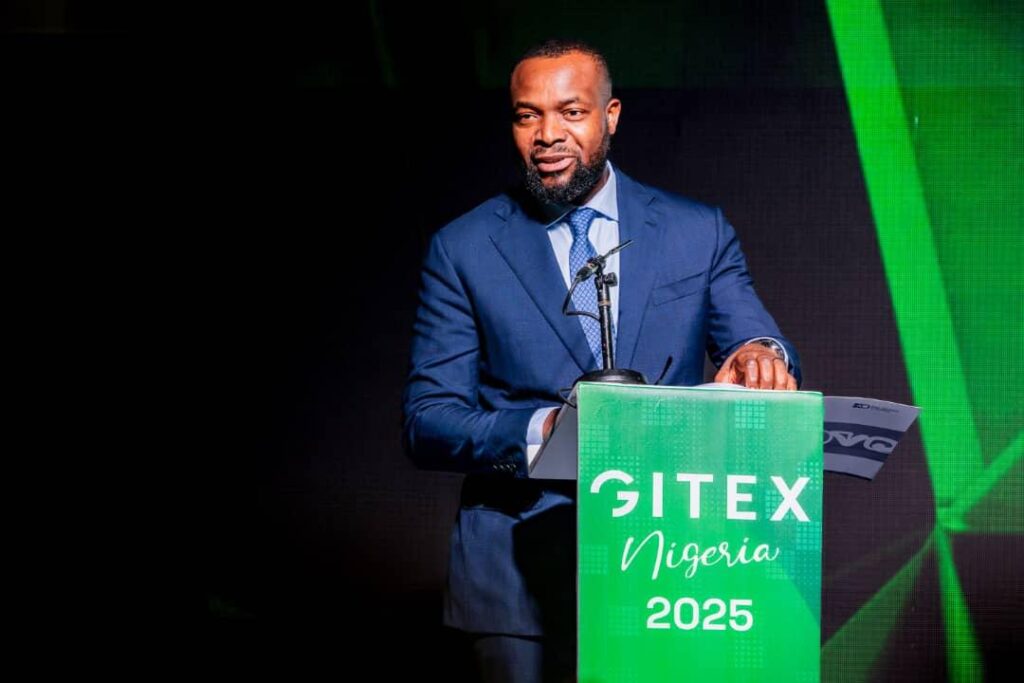
Minister of Communications, Innovation and Digital Economy, Dr. Bosun Tijani, unveiled a bold vision of Nigeria as a digitally connected, globally competitive nation.
He noted that the ICT sector has grown from less than 5% of GDP to consistently contributing 16–18%, with projections to hit 21% by 2027. “Nigeria is not just a market—we are an innovation and creative powerhouse,” he said.
Highlighting the broader creative economy, Tijani pointed to Nollywood’s global dominance and Afrobeats’ rise on world stages, with the sector projected to generate over $15 billion in coming years. “This is where code meets culture,” he said.
To strengthen this momentum, the ministry is deploying a 90,000-kilometre fibre backbone under Project BRIDGE, and rolling out the 3MTT digital skills programme—the world’s largest coordinated tech skills initiative.
He also announced upcoming National Digital Economy and E-Governance Bills to guarantee trust, security, and accountability in Nigeria’s digital space, as well as support for AI-driven innovation and research.
“The government is building the foundation—fiber networks, talent pipelines, enabling legislation,” Tijani said