

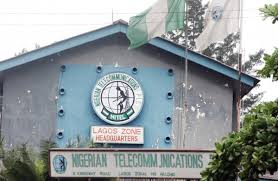
For more than 16 years, the Federal Government made repeated attempts to privatize NITEL. In that period, diverse stakeholders offered sharply differing views on the right path for the nation’s first telecommunications carrier.
They pointed to squandered opportunities and the dynamism of an industry that was moving at remarkable speed. Many argued that if government had been truly committed to NITEL’s survival, and listened to expert advice rather than political expediency, the company could have been revived.
Prominent voices such as Ernest Ndukwe, Professor Augustine Odinma, and Tayo Ekundayo, former Nitel Public Relations Manager, were firm in their positions.
Ndukwe believed that, by 2007, the best approach was to separate NITEL from M-Tel and reposition it as a provider of backbone infrastructure—long-distance and fixed wireless services—just as national carriers in Europe and the United States had done. “If NITEL had concentrated on that, it would have been a very successful company today,” he argued.
Odinma, on the other hand, insisted that NITEL should not have been privatized at all. He pointed to Norway’s Telenor, where the state retains 77.7% ownership but allows private sector management with minimal interference. By contrast, even after selling 51% of NITEL to Transcorp, government meddling continued. Many believed this interference strangled NITEL’s chances of survival.
Ekundayo was more pragmatic. He noted that competitors were rapidly laying their own fibre networks, eroding NITEL’s natural advantage. He argued that, if NITEL had been positioned as the national backbone provider, all operators would have depended on it for circuits, creating a sustainable revenue-sharing model.
Ige, another stakeholder, emphasized that NITEL’s vast infrastructure—microwave routes, repeater stations, exchanges, ducts, and towers across the country—still represented huge value. Properly documented and marketed, these assets could attract major international telecom investors. In his view, NITEL could still reclaim a dominant role, just as BT in the UK and AT&T in the US continue to play leading roles despite privatization.
Up until 2012, Ige maintained that there was still hope. NITEL’s underground ducts, facilities in strategic locations, and right-of-way advantages could have been refurbished and leased to private operators, reducing duplication and providing a sustainable business model.
Stakeholders agreed on one point: with the right management, transparency, and a clear strategic vision, NITEL could have retained its relevance and possibly remained supreme in Nigeria’s telecom landscape