
By Aaron Ukodie, Pioneer ICT Reporter
The Chairman of the Association of Licensed Telecommunications Operators of Nigeria (ALTON), Engr. Gbenga Adebayo, has reaffirmed the commitment of telecommunications operators to expanding digital access across Nigeria, describing the sector as the foundation upon which the country’s digital economy is being built.
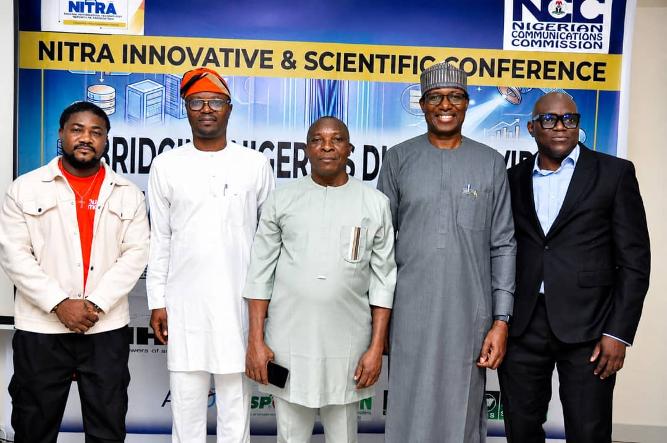
Speaking at the Nigeria Information Technology Reporters’ Association (NITRA) Innovative Conference 2026, themed “Bridging Nigeria’s Digital Divide with Scientific Innovation,” Adebayo said the telecommunications industry has evolved from providing basic voice services to becoming the backbone of banking, education, healthcare, commerce, agriculture, security and governance.
He noted that Nigeria’s telecom sector remains one of Africa’s most successful examples of economic liberalisation, having grown from fewer than 500,000 connected telephone lines before GSM was introduced in 2001 to more than 200 million active subscriptions today.
According to him, operators have invested billions of dollars over the past 25 years in mobile networks, fibre-optic infrastructure, international connectivity, data centres, cloud platforms, renewable energy systems and emerging technologies, including 5G, significantly expanding broadband coverage and driving digital inclusion.
Adebayo commended President Bola Ahmed Tinubu’s administration for recognising digital infrastructure as a critical driver of economic growth, innovation and national security, saying recent government policies have strengthened investor confidence and improved the operating environment.
He also praised the Nigerian Communications Commission (NCC), under the leadership of Dr. Aminu Maida, for adopting a transparent and consultative regulatory approach that balances consumer protection with industry sustainability.
Among the achievements highlighted were the resolution of the long-standing USSD debt dispute between telecom operators and banks, the review of retail tariff frameworks following years of rising operational costs, and the implementation of the Critical National Information Infrastructure (CNII) framework aimed at protecting telecom infrastructure.
“The Commission has demonstrated that effective regulation is achieved not through confrontation but through collaboration,” Adebayo said.
Despite the progress recorded, the ALTON chairman warned that the industry continues to grapple with major challenges, including multiple taxation, Right-of-Way bottlenecks, infrastructure vandalism, fibre cuts caused by road construction, unreliable electricity supply, insecurity and foreign exchange volatility.
He stressed that improving Quality of Service (QoS) requires more than regulatory sanctions on operators.
“Quality of Service cannot be improved through fines and penalties alone,” he said, urging government agencies, security organisations, road construction authorities, host communities and operators to adopt a “whole-of-society approach” to protecting telecommunications infrastructure.
Adebayo commended the Office of the National Security Adviser and security agencies for increasing efforts to combat vandalism, noting that several arrests had been made and that engagements with federal and state ministries were helping reduce accidental damage to fibre networks during road construction.
He also used the occasion to dismiss reports suggesting that the NCC’s ongoing Mobile Termination Rate (MTR) cost study would automatically lead to another increase in retail telecom tariffs.
According to him, the exercise is strictly a wholesale interconnection cost review designed to establish fair and cost-reflective charges between operators and should not be interpreted as a proposal for higher consumer tariffs.
“There is currently no industry proposal before the NCC seeking a review of retail tariffs arising from this exercise,” he stated.
Looking ahead, Adebayo identified Artificial Intelligence, the Internet of Things, cloud computing, satellite broadband and 5G as technologies that will accelerate digital inclusion and strengthen Nigeria’s competitiveness in the global digital economy.
He maintained that universal digital inclusion would require sustained investment, supportive government policies, infrastructure protection, local content development and improved digital literacy.
Earlier, NITRA Chairman, Mr. Chike Onwuegbuchi, said the conference was organised to stimulate practical discussions on closing Nigeria’s digital gap through innovation.
He observed that bridging the digital divide goes beyond deploying infrastructure and must ensure affordable internet access, digital devices, digital literacy and equal opportunities for all Nigerians to benefit from education, healthcare, financial services and e-government.
Citing research by the Nigerian Economic Summit Group, Onwuegbuchi said full digital inclusion could add about $88 billion to Nigeria’s Gross Domestic Product by 2030, while significantly improving the growth prospects of small and medium enterprises, which account for the overwhelming majority of businesses in the country.
He noted that the conference brought together regulators, telecom operators, infrastructure providers, fintech companies, cybersecurity experts and other ICT stakeholders to examine practical strategies for accelerating Nigeria’s digital transformation and ensuring that no community is left behind.