

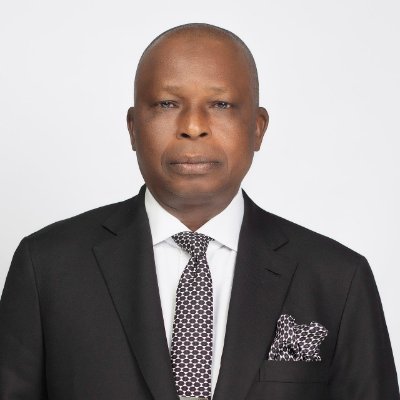
The Attorney-General of the Federation and Minister of Justice, Chief Lateef Fagbemi (SAN), has called on all tiers of government—federal, state, and local—to collaborate with the Nigerian Communications Commission (NCC) and other stakeholders to strengthen the regulation of the communications sector and accelerate Nigeria’s digital transformation.
Delivering the keynote address at a high-level workshop themed “Building and Driving Synergy in Regulating Communications for the Digital Transformation in Nigeria,” Chief Fagbemi emphasized the importance of coordinated action across the three arms of government—legislature, executive, and judiciary—to enhance regulatory effectiveness.
“The legislature must review and strengthen laws that protect critical infrastructure and support the communications sector,” he said. “The executive should reinforce implementation measures, while the judiciary must ensure that saboteurs and offenders are held accountable.”
He stressed that state governments must not be left out, highlighting the 2023 example of Anambra State’s adoption of a unified Right of Way (RoW) policy, which led to a 38% increase in fibre optic expansion within just six months. Fagbemi described this as a model of proactive governance worth emulating.
According to him, several actionable strategies are required to ensure synergy across all stakeholders. These include:
- Harmonizing legal and policy frameworks at all levels.
- Establishing a Federal-State Regulatory Coordination Forum.
- Implementing a uniform RoW policy nationwide.
- Joint enforcement of laws protecting infrastructure.
- Consolidating the digital taxation framework to avoid multiple levies.
“As Attorneys-General and Chief Law Officers under the Constitution, we have a unique responsibility,” he said. “We must advise our respective governments on policies that affect the digital economy, ensure constitutionally sound enforcement, and support dispute resolution mechanisms that avoid prolonged litigation.”
Chief Fagbemi also urged his colleagues to champion causes such as data privacy, cybersecurity, and the enforcement of digital rights at the state level.
He commended the NCC for its foresight in convening the workshop to bridge the knowledge gap in regulatory frameworks and deepen institutional collaboration.
“Digital transformation is vital to socio-economic development. A well-regulated communications sector ensures the protection of rights—privacy, data protection, consumer rights—and also enhances the ease of doing business,” he stated.
Citing data from the NCC, the Minister noted that Nigeria now has over 220 million active voice subscriptions as of Q1 2025, with broadband penetration surpassing 52%. He described this growth as a foundation for remote education, financial inclusion, and economic diversification—especially in rural areas.
Despite these gains, the AGF warned that serious challenges persist:
- Multiple taxation and levies at all government levels.
- Destruction of telecom infrastructure, particularly in conflict zones.
- Regulatory overlaps that complicate compliance for operators.
- Delays in broadband roll-out, often due to RoW bottlenecks and inconsistent state policies.
He cited two troubling examples: the 2024 multiple taxation incident in Ogun State, which led to a temporary suspension of expansion projects due to overlapping local government levies; and the 2023 vandalization of base stations in Kano State—both incidents he described as acts of economic sabotage.
In conclusion, Chief Fagbemi urged all Attorneys-General and stakeholders to work in synergy with the NCC to build a robust, secure, and inclusive digital economy that delivers tangible development outcomes for all Nigerians.