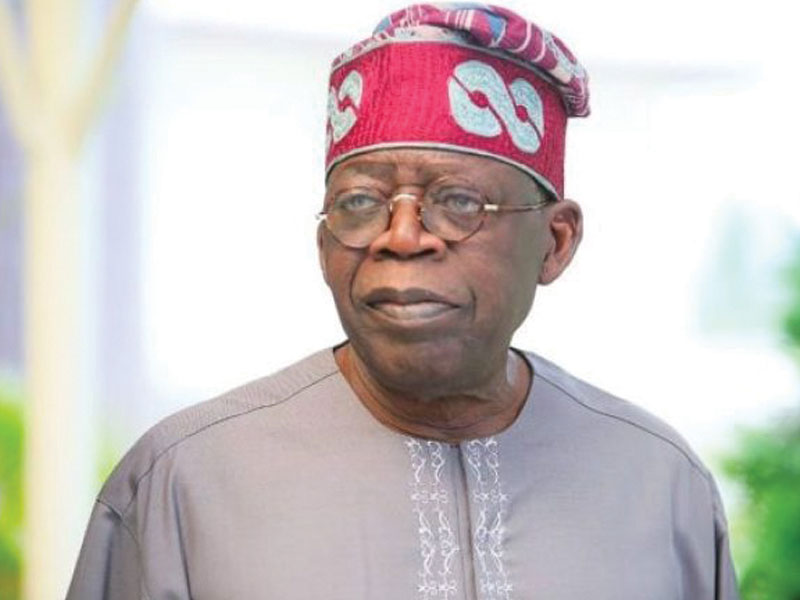
As the Federal Government prepares a documentary to celebrate President Tinubu’s achievements in the digital economy, the spotlight on broadband infrastructure reveals a deeper story—one of foundations laid years ago, with successes and failures that transcend administrations.
By Aaron Ukodie
In a recent press statement, Bayo Onanuga, Special Adviser to President Bola Tinubu on Media and Communication, announced an upcoming documentary to showcase the administration’s strides in the digital economy. One key feature will be the government’s efforts in broadband connectivity under an ambitious new programme tagged Project Bridge.
According to the Minister of Communications, Dr. Bosun Tijani, Project Bridge will see the deployment of 90,000 kilometres of fibre optic cable across Nigeria, with work scheduled to begin in the fourth quarter of this year. He revealed that a $2 billion investment is being prepared to support the initiative.
“We want to ensure that every Nigerian has access to affordable, high-quality internet regardless of where they live. A 10% increase in connectivity hubs could add as much as 2.5% to our GDP,” Tijani noted.
This announcement is encouraging. But beneath the surface of this planned celebration lies a deeper truth—Nigeria’s journey toward a digitally connected future is not starting with Project Bridge, nor with the Tinubu administration. The path was paved more than a decade ago, and that story deserves to be told.
Before Tinubu: Foundations of Fibre
Nigeria’s fibre optic journey was given strategic direction under President Goodluck Jonathan, particularly through his Minister of Communication Technology, Dr. Omobola Johnson. Between 2011 and 2015, the Johnson-led ministry launched the National Broadband Plan (2013–2018), with an ambitious goal: to grow broadband penetration from 6% in 2013 to 30% by 2018.
The strategy introduced a game-changing idea—Infrastructure Companies (InfraCos)—tasked with deploying metropolitan and regional fibre infrastructure across Nigeria’s six geopolitical zones, plus Lagos.
The logic was simple: create a neutral, open-access fibre network that would reach unserved and underserved communities, and allow multiple internet service providers (ISPs) to plug in. It was an infrastructural backbone model intended to attract public-private investment and reduce duplication of infrastructure.
After Dr. Johnson’s tenure, the Nigerian Communications Commission (NCC) began licensing the InfraCos:
MainOne Cable Company (Lagos)
IHS Nigeria (North Central)
Later additions included operators for the South West, South East, South South, North East, and North West zones.
They include Zinox Technologies for the South East, Od’ua Infraco for the South West, Raeanna for the SouthSouth and IPNX for the North West
The Hurdles Begin
However, this visionary InfraCo model ran into practical roadblocks. Chief among them were:
High Right of Way (RoW) charges imposed by state governments
Delayed funding support from government financial agencies
Bureaucratic red tape at federal and state levels
Security concerns in many zones.
The Danbatta NCC promised to inject about 60 billion from the Universal Access Provision Fund ( USPF) managed by it, to support the Infracos roll-out. It is not clear if the NCC kept to its promise.
Despite these challenges, some progress was recorded. MainOne, backed by strong private investment, made significant fibre deployments in Lagos—still Nigeria’s most fibre-dense state today.
A Renewed Push Under Buhari
Under the Muhammadu Buhari administration, led by Minister Isa Ali Pantami and NCC Executive Vice Chairman Prof. Umar Danbatta, the National Broadband Plan (2020–2025) was launched. It increased the fibre target to 120,000km and set a new broadband penetration goal of 70% by 2025.
Efforts were intensified to:
Harmonize RoW policies across states
Provide capital access through the Central Bank of Nigeria and the Development Bank of Nigeria
Engage state governors on infrastructure deployment
Promote infrastructure sharing and co-location to reduce costs
There was also rising private sector involvement—MainOne was acquired by global data giant Equinix, while firms like MTN Nigeria, Glo, and Zinox Fiber ramped up fibre projects in urban areas and along highways.
But the InfraCo model still struggled in many zones. According to industry data as of 2025:
MainOne (Lagos) has nearly completed deployment
Zinox Technologies Ltd (South East) has partial success
Brinks Integrated Solutions Ltd (North East) is hampered by insecurity
Fleek Networks Ltd, an IHS subsidiary (North Central), has recorded moderate rollout
O’dua Infraco (South West), led by Broadbased Communications Ltd, has made some progress
Raeanna Consortium (South South) and IPNX Nigeria Ltd (North West) have shown minimal advancement
Where Are We Now?
A decade since the InfraCo idea was conceived, Nigeria still faces familiar obstacles:
Slow funding disbursements from the Universal Service Provision Fund (USPF)
Persistent RoW barriers in many states
Insecurity in the North East and North West
Exchange rate pressures affecting importation of network equipment
Vandalism of deployed infrastructure
As a result, some InfraCos are being overtaken by mobile network operators (MNOs) and independent tech companies, who are now deploying fibre on their own terms, especially in profitable corridors.
Project Bridge: A Fresh Start or Repackaged Legacy?
While the Tinubu government’s $2 billion broadband plan is bold and necessary, it’s crucial not to frame it as a brand-new initiative. Nigeria’s fibre journey has seen the input of multiple administrations, from Obasanjo to Jonathan to Buhari, with important contributions by figures like Dr. Ernest Ndukwe, Dr. Eugene Juwah, Dr. Omobola Johnson and Prof Umar Danbatta.
If the new documentary on Tinubu’s achievements is to be meaningful, it must acknowledge that the digital economy of today is standing on foundations laid years ago. Project Bridge should be seen not as a fresh beginning, but as a continuation—one that must finally deliver on the promise of universal connectivity.
Looking Ahead
Nigeria’s broadband future depends not just on new cable deployments, but on clear policy continuity, regulatory coherence, stakeholder collaboration, and financial support. Revamping the InfraCo model into a true public-private partnership is essential.
Rather than reinvent the wheel, we must oil and drive it forward—toward the digital Nigeria we’ve long envisioned.