
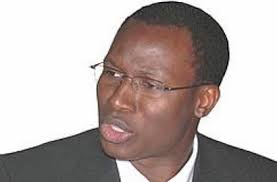
Gbenga Adebayo, Chairman of the Association of Licensed Telecommunications Operators of Nigeria (ALTON), highlights the growing threat of fibre cuts, vandalism, theft, insecurity, and multiple taxation to Nigeria’s telecommunications sector, while calling for stronger protection of telecom infrastructure and policy reforms to support industry growth.
The Chairman of the Association of Licensed Telecommunications Operators of Nigeria (ALTON), Gbenga Adebayo, has raised concerns over the increasing rate of fibre-optic cable cuts, vandalism, insecurity, and multiple taxation, warning that these challenges continue to undermine the quality and reliability of telecommunications services across Nigeria.
Speaking during a recent interview on ARISE News TV, Adebayo contrasted the reliability of international submarine cable infrastructure with the challenges facing terrestrial fibre networks within the country.
“The fibre-optic cable in the Atlantic has probably experienced only one outage in the last two years. In contrast, the fibre route running from Lagos to Kano records an average of about 40 cuts every day,” he said.
According to him, the frequent cuts not only disrupt network services but also significantly increase operational costs for telecom operators, ultimately affecting service quality and customer experience.
Adebayo noted that beyond fibre vandalism, the industry is grappling with widespread theft of critical telecom infrastructure, including batteries, generators, and other network equipment. He explained that security challenges in some parts of the country often delay restoration efforts when outages occur.
“There are security challenges. People are stealing batteries and generators,” he said, adding that some locations remain inaccessible until security conditions improve.
The ALTON chairman called for urgent policy reforms, particularly regarding right-of-way (RoW) charges and multiple taxation, which he described as major impediments to telecommunications infrastructure expansion.
“Right-of-way charges should be eliminated across the country. The issue of multiple taxation must become a thing of the past,” he stated.
He stressed that telecommunications infrastructure should be treated as critical national infrastructure and accorded the protection necessary to support Nigeria’s digital economy ambitions.
On the issue of rising energy costs, Adebayo disclosed that operators are increasingly adopting hybrid and renewable energy solutions to power network sites. However, he acknowledged that the transition is gradual and remains vulnerable to vandalism and theft.
“We are investing significantly in renewable energy and hybrid power solutions, but the transition takes time,” he said.
While acknowledging recent policy support from government and regulators, Adebayo maintained that sustainable growth in the telecom sector would require stronger collaboration among government agencies, regulators, security institutions, operators, and host communities.
He emphasized that addressing vandalism, insecurity, regulatory bottlenecks, and infrastructure protection would be crucial to improving service quality, expanding broadband penetration, and attracting further investment into Nigeria’s telecommunications sector.