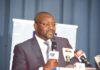

The Chairman of the Association of Licensed Telecommunications Operators of Nigeria (ALTON), Engr. Gbenga Adebayo, has called for sustained investment, policy consistency and stronger protection of telecommunications infrastructure to accelerate Nigeria’s digital economy and strengthen the country’s competitiveness.
Speaking at the Lagos Chamber of Commerce and Industry (LCCI), Adebayo described telecommunications as the “digital backbone” of the economy, saying virtually every sector—including banking, manufacturing, healthcare, education, agriculture, logistics and government services—now depends on reliable digital connectivity.
He stressed that Nigeria’s future economic competitiveness would be determined not only by the quality of its physical infrastructure but also by the reach, resilience and reliability of its digital infrastructure.
According to him, emerging technologies such as Artificial Intelligence (AI), cloud computing, fintech, e-commerce, digital media, smart manufacturing and precision agriculture all rely on robust broadband infrastructure.
“Without resilient telecommunications networks, there can be no meaningful AI economy. Without fibre infrastructure, there can be no digital industrialisation. Telecommunications is no longer simply supporting the economy—it is becoming the economy’s digital backbone,” he said.
Adebayo commended the Federal Government for designating telecommunications infrastructure as Critical National Information Infrastructure (CNII), describing the move as a strategic step towards protecting assets that are vital to national productivity and investor confidence.
He, however, stressed that safeguarding telecommunications infrastructure should not be left to government alone, calling for a “Whole-of-Society” approach involving government agencies, regulators, operators, businesses, host communities and law enforcement agencies.
On investment, the ALTON chairman noted that Nigeria requires billions of dollars in sustained capital to expand fibre networks, improve rural connectivity, deploy 5G infrastructure and prepare for future technologies.
He identified policy consistency, regulatory certainty, protection of investments, efficient Right-of-Way processes, reduction of multiple taxation, elimination of infrastructure vandalism and faster approvals for network deployment as critical factors needed to attract long-term investment.
Adebayo acknowledged the Federal Government’s 2025 telecommunications tariff adjustment, saying it restored financial sustainability to the industry after a period of severe operational pressure.
He disclosed that Mobile Network Operators (MNOs), Tower Companies and other industry players invested about ₦2.13 trillion in capital expenditure in 2025, with an additional ₦1.86 trillion planned for network expansion, technology modernisation and service improvement in 2026.
According to him, much of the industry’s investment comes from reinvested earnings, domestic capital and other financing mechanisms that are not fully reflected in conventional capital importation statistics.
To address this gap, he said ALTON had proposed closer collaboration among the Nigerian Communications Commission (NCC), the National Bureau of Statistics (NBS) and the Central Bank of Nigeria (CBN) to develop a more comprehensive framework for measuring telecommunications investment.
A significant portion of his address focused on growing public concerns over alleged data depletion by telecommunications operators.
Rejecting claims that operators deliberately steal customers’ data, Adebayo said such allegations were unfounded and inconsistent with the industry’s billing systems and regulatory framework.
He explained that mobile data usage has increased significantly because modern smartphones continuously consume data through background activities such as cloud backups, software updates, application synchronisation, high-definition video streaming, artificial intelligence services, location tracking and security updates.
According to him, billing systems used by operators are based on internationally recognised standards, supplied by global technology vendors and subject to regulatory oversight by the NCC.
Rather than spreading unverified allegations, he urged greater digital literacy to help consumers understand how smartphones consume data and how built-in data management tools can be used to monitor usage.
“The digital economy cannot flourish where misinformation erodes trust. Let us promote facts over speculation, evidence over perception, and partnership over suspicion,” he said.
Looking ahead, Adebayo envisioned a digitally connected Nigeria where businesses enjoy affordable high-speed broadband, schools and hospitals are fully connected, manufacturers embrace smart factories, agriculture leverages precision technology and entrepreneurs build globally competitive digital enterprises.
He maintained that achieving this vision would require sustained investment, infrastructure protection, policy stability and stronger collaboration between government and the private sector.
“The future of Nigeria’s economy will increasingly be measured by its digital competitiveness. Telecommunications is no longer simply about connecting people. It is about connecting opportunities, industries, innovation and investment, and ultimately connecting Nigeria to a more prosperous future,” he said.