
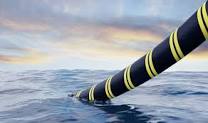
he Nigerian Communications Commission (NCC) has called for stronger coordination between road construction companies, contractors, engineers, telecommunications operators and government agencies to prevent damage to fibre-optic infrastructure during road construction and other civil works.
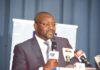
The Executive Vice Chairman and Chief Executive Officer of the NCC, Dr. Aminu Maida, made the call on August 11, 2026, at a stakeholders’ workshop on the protection of fibre-optic cables held at the National Counter-Terrorism Centre (NCTC), Office of the National Security Adviser, Abuja.
Maida warned that Nigeria’s rapid expansion of physical infrastructure must not come at the expense of the digital networks that support the country’s economy and essential services.
He disclosed that more than 5,000 fibre-cut incidents were recorded in the first six months of 2026, largely linked to road construction, excavation and other civil works.
According to him, fibre infrastructure has become a critical national lifeline, supporting banking, government services, education, healthcare, commerce, security and emergency communications. Damage to the infrastructure, he noted, can result in service disruptions and significant economic losses.
“To a machine operator on a construction site, it may appear to be one buried cable. To the nation, it can mean failed calls, stalled payments, interrupted services and missed opportunities,” Maida said.
He recalled that fibre cuts in February 2024, including those associated with road construction, triggered an almost network-wide disruption on one telecommunications network, affecting millions of subscribers for several hours and placing additional pressure on other networks.
The NCC boss stressed that the problem should not be viewed as a contest between road construction and telecommunications infrastructure, but as a coordination challenge requiring all stakeholders to work together.
“No road contractor deliberately seeks to disconnect a community, just as telecommunications operators do not intend to obstruct road construction,” he said, emphasising the need for early and reliable coordination before excavation and construction activities begin.
Maida disclosed that the Permanent Secretaries of the Federal Ministry of Works and the Federal Ministry of Communications, Innovation and Digital Economy had established a Standing Committee on the Protection of Fibre Optic Cables to develop practical mechanisms for coordinating activities before, during and after road projects.
The committee’s membership, he added, had recently been expanded to include representatives of the Office of the National Security Adviser, reflecting the growing security implications of protecting telecommunications infrastructure.
Telecommunications infrastructure has been designated as Critical National Information Infrastructure, requiring it to be treated as national infrastructure and protected with appropriate legal, regulatory and remedial measures.
Maida urged telecommunications operators, contractors, government agencies, regulators and security agencies to assume their respective responsibilities in preventing fibre damage.
He said coordination and infrastructure protection must become standard components of the planning and execution of road construction, rehabilitation and excavation projects.
“Nigeria must build the roads that connect our communities while protecting the fibre networks that connect our economy. We need both forms of infrastructure, and we need them to work together,” he said.
The Abuja workshop is part of wider efforts by the NCC and other stakeholders to institutionalise mechanisms for protecting telecommunications infrastructure, reducing service disruptions and supporting Nigeria’s digital transformation.
The engagement is expected to contribute to the development of a framework for protecting fibre-optic infrastructure during road construction and other excavation activities across the country.
If you want, I can also make it more punchy and newspaper-like, with a stronger opening paragraph and headline suitable for The Guardian, ThisDay, Punch, or a technology publication.