By Aaron Ukodie
While Nigeria waited for the GSM revolution, another kind of network was being established every Tuesday evening—in the home of Ernest Ndukwe.
The story of Nigeria’s GSM revolution has been told many times.
It is a story of bold policy, political will, technology, investment and regulatory courage. It is the story of how Nigeria moved from a painfully inadequate telecommunications system to one of Africa’s biggest and most vibrant telecom markets.
But there is another story.
A quieter story.
A story that unfolded away from the cameras, the boardrooms and the headlines.
It was a story of prayer.
For ten years, during Dr Ernest Ndukwe’s tenure as Executive Vice Chairman of the Nigerian Communications Commission (NCC), Tuesday evenings at his home were different.
Ndukwe, Dr Tony Ojobo—who served as his Special Assistant before later becoming Director of Public Affairs—and Pastor Paul Wilfred would gather for prayer.
They prayed for the NCC. They prayed for the telecommunications industry. They prayed for the success of the GSM licensing process and the enormous national transformation that was beginning to take shape.
Sometimes, they fasted.
There was no publicity around it. No press release. No announcement.
Just a small group of believers who were convinced that the responsibility placed on the NCC was too important to be left entirely to human wisdom.
“We maintained that prayer altar for ten years,” one of the participants recalled. “Sometimes there was fasting. We made regular petitions for the success of the auction, the NCC and the industry.”
The significance of this testimony becomes even clearer when one considers the turbulent circumstances surrounding the birth of Nigeria’s GSM revolution.
Nigeria was about to embark on one of the most consequential transformations in its modern history.
The GSM licence auction was not simply another government transaction. It was the gateway to a telecommunications revolution that would eventually change how Nigerians lived, worked, communicated and did business.
But getting there was anything but easy.
There were institutional interests, competing agendas and powerful forces around the licensing process. Even the Bureau of Public Enterprises (BPE) became involved in attempts to influence the auction process.
Inside the NCC, Ndukwe also faced opposition.
One of the more remarkable episodes involved a female member of the NCC Board who, according to recollections from those close to the events, frequently challenged Ndukwe during board meetings.
To those involved in the prayer meetings, she had become an obstacle to the smooth execution of the NCC’s mandate at a critical period.
Then came a moment they would never forget.
The prayer and fasting intensified.
The weekend before the woman was removed from the Board, the group prayed and fasted.
And then came what they regarded as an extraordinary answer to prayer.
President Olusegun Obasanjo summoned Ndukwe and the respected elder statesman, Alhaji Ahmed Joda, to his office.
What happened next caught Ndukwe by surprise.
The President announced the woman’s removal from the NCC Board.
There had been no lengthy public campaign surrounding the decision. No dramatic warning preceded it.
The decision came directly from the President.
And, according to those who recall the episode, the vacant position was never filled for the remainder of Ndukwe’s first tenure.
For the men who had spent the previous weekend praying and fasting, the timing was impossible to ignore.
They saw the development as divine intervention.
It became one of those stories they quietly carried with them—a moment when, in their view, the invisible hand of God appeared to intersect with the visible affairs of the NCC.
“God was at work in NCC,” one of the prayer partners recalled.
A Revolution with Divine Backing
That conviction was rooted in Ndukwe’s own faith.
He was a committed Christian and opened his home to the prayer gatherings. His faith was not something kept separate from his public responsibility.
The prayers were not simply about Ndukwe’s personal success.
They were about an institution.
They were about an industry.
They were about a national assignment.
And they were about a revolution whose consequences nobody could fully predict at the time.
When the GSM licences were eventually auctioned, Nigeria crossed a historic threshold.
The revolution that followed was extraordinary.
Mobile phones moved from being symbols of privilege to becoming everyday tools. Businesses that had struggled with unreliable fixed lines suddenly had mobile connectivity. Banks began building new channels around mobile communications. Entrepreneurs found new opportunities. Families could communicate across distances with unprecedented ease.
Then came the internet boom, mobile banking, fintech, e-commerce, social media and the digital economy.
The GSM revolution became the foundation for an entirely new Nigeria.
But the men who gathered every Tuesday believed there was something more to the story.
They did not deny the importance of policy.
They did not diminish the contribution of Ndukwe, his team, the government, investors, engineers, entrepreneurs or the thousands of Nigerians who built the ecosystem.
Rather, they believed that behind the human effort was divine backing.
“God used Ndukwe mightily to accomplish that revolution,” one of them said.
The Reporter Who Watched History Unfold
For me, this story carries a personal dimension.
I was there.
As a pioneer ICT journalist and publisher of eWorldNews, I followed Nigeria’s telecommunications industry closely through those formative years. I watched the policy debates, the regulatory battles, the emergence of the GSM operators and the extraordinary changes that followed.
Like many journalists who covered the sector, I reported the visible events.
But some stories are not found in press releases or official documents.
Some are preserved in the memories of the people who lived through them.
This is one of those stories.
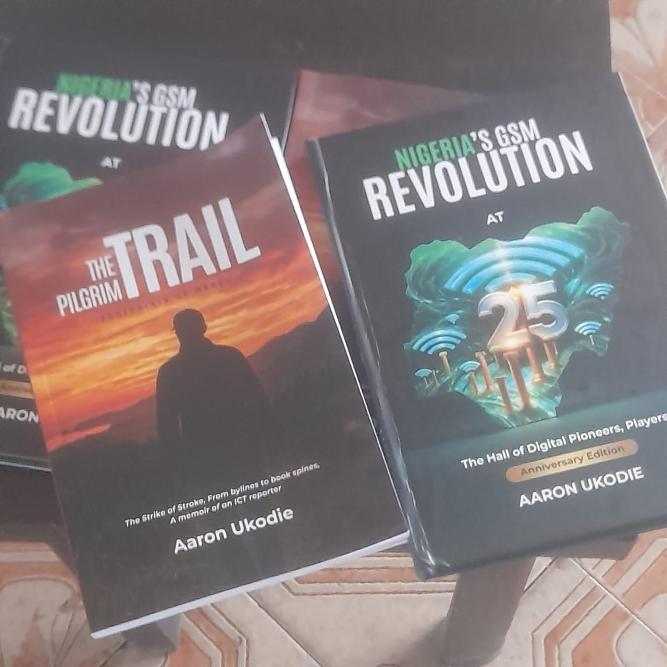
Twenty-five years later, I believe the history of Nigeria’s GSM revolution deserves to be told from more than one perspective.
There is the official history: licences, spectrum, regulation, competition and investment.
There is the human history: the men and women who took risks, fought battles and built companies.
And then there is the hidden history.
The history of the prayers.
Every Tuesday evening, for ten years, in the home of the man at the centre of Nigeria’s telecommunications transformation, a small group gathered.
They prayed.
They fasted.
They petitioned God for the NCC and the industry.
And they watched events unfold.
For them, some of those events were simply too extraordinary, too perfectly timed, to be explained only in terms of policy and politics.
Twenty-five years later, the GSM revolution is rightly celebrated as one of Nigeria’s greatest economic and technological success stories.
But perhaps there was another network behind the network.
While Nigeria waited for the GSM revolution, a different kind of network was already active every Tuesday evening.
It was a network of faith.
And for ten remarkable years, Ernest Ndukwe and his prayer partners kept it alive.
God was listening.
It is a testimony to the workings of God. They believed God was at work in the life of the NCC and in an industry that has recorded unmatched success in Nigeria’s history.
Ukodie is a pioneer ICT reporter and publisher of eWorldNews.